French physicist Claude Cohen-Tannoudji passed away in Paris in October 2026 at the age of 93. Born in Algeria in 1933, he moved to France for his university studies and went on to become one of the most respected teachers and researchers in modern physics, spending decades inspiring students at the Collège de France and the École Normale Supérieure.
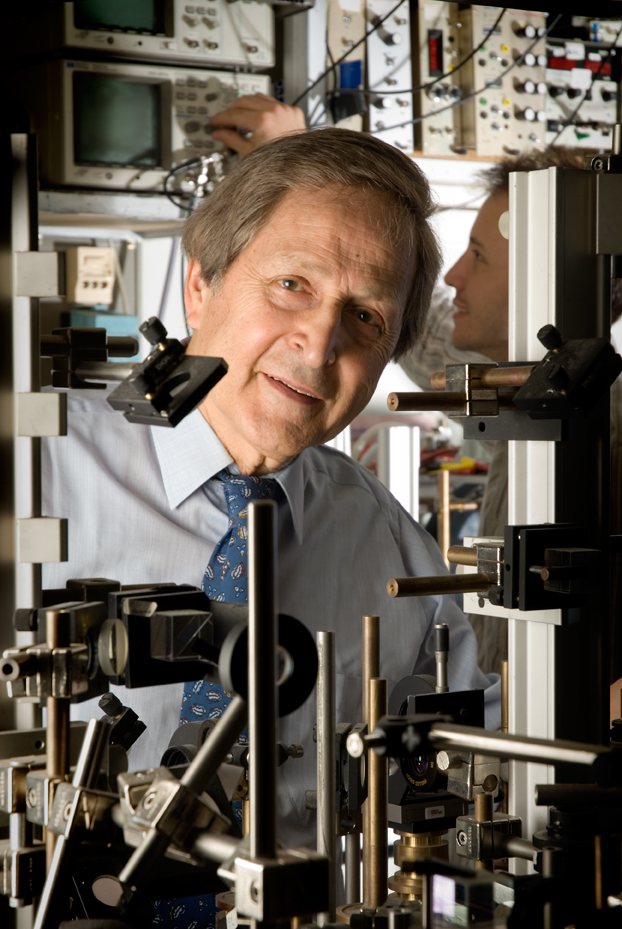
His greatest scientific breakthrough was figuring out how to cool and trap atoms using laser light. In nature, atoms constantly buzz and zip around at the speed of a jet plane, which makes them almost impossible to study or measure accurately. Cohen-Tannoudji realized that carefully tuned laser beams could act like a sticky liquid—pushing gently against the atoms from all directions to slow them down to a crawl and cool them to a fraction of a degree above absolute zero. For this pioneering work, he was awarded the Nobel Prize in Physics in 1997 alongside Steven Chu and William Phillips.
While slowing down atoms sounds like pure lab science, his work touches our everyday lives. Freezing atoms in place allowed scientists to build the world’s most precise atomic clocks. These ultra-accurate clocks are what make GPS navigation on our phones, airline flight tracking, and global internet networks work without losing a single split second. His discoveries also paved the way for modern quantum computing and high-tech brain sensors, proving that asking deep questions about basic science can change the world in practical ways.